Dissolving Sugar: Futures Beyond Stigma
Dissolving Sugar: Futures Beyond Stigma
Open conversation.
Friday, November 6th, 20:00 – 22:00
We warmly invite you to an open conversation, moderated by ubiquitousssssssssssssssssugar curator Diego Virgen. We will discuss the current state of affairs surrounding sugar as an opportunity to engage in a collective conversation – within an artistic context – about the specific nature of sugar, its possibilities, and future alternatives, while simultaneously reflecting on its past and origins. Perhaps we can learn from the experiences we, as a society, have had over the past centuries, and the ones we are having at a public health nutritional level from an epidemiological and agricultural perspective.
Dissolving Sugar: Futures Beyond Stigma
open gesprek.
Vrijdag 6 november, 20:00 – 22:00
We nodigen je van harte uit voor een open gesprek, gemodereerd door ubiquitousssssssssssssssssugar curator Diego Virgen. We bespreken de huidige stand van zaken rondom suiker. Dit biedt de mogelijkheid tot een collectief gesprek – binnen een artistieke context – over de specifieke aard van suiker, de mogelijkheden ervan en toekomstige alternatieven, terwijl we tegelijkertijd stilstaan bij het verleden en de oorsprong ervan. Wellicht kunnen we leren van de ervaringen die wij als samenleving de afgelopen eeuwen hebben gehad, evenals van de ervaringen die we momenteel – vanuit epidemiologisch en agrarisch perspectief – hebben op het gebied van volksgezondheid en voeding.
The Speakers:
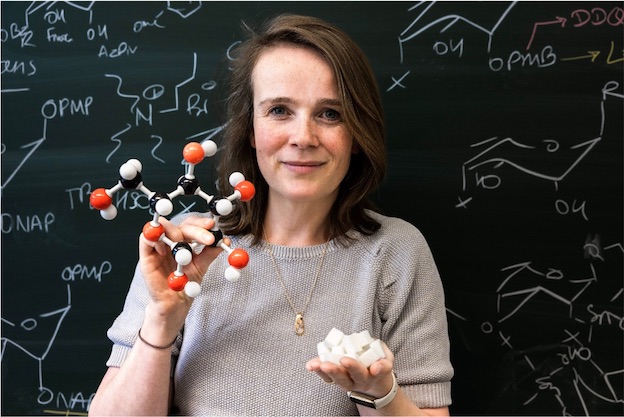
Professor Marthe Walvoort of the Stratingh Institute for Chemistry has just received the KNCV Van Marum Medal dd. 29th of October 2026 for SlimSmullen, an initiative that teaches primary-school children about sugar, food and health in an accessible and playful way. The award recognises her contribution to making chemistry and science visible and relevant to society.
With ‘SlimSmullen’, Walvoort and her team help children understand what sugar is, where it occurs in food, and how it affects the body. The initiative provides ready-made lesson materials for primary-school teachers, developed together with nutritionists, teachers and knowledge-transfer experts.
“Sugar is not necessarily unhealthy. But children should understand what they eat and how sugar works in their bodies. SlimSmullen lets them explore this in a playful way.”
Professor Marthe Walvoort van het Stratingh Institute for Chemistry heeft de KNCV Van Marum-medaille net op 29-10- 2026 ontvangen voor ‘SlimSmullen’, een initiatief dat basisschoolleerlingen op een toegankelijke en speelse manier leert over suiker, voeding en gezondheid. De onderscheiding is een erkenning voor haar bijdrage aan het zichtbaar en relevant maken van chemie en wetenschap voor de samenleving.
Met ‘SlimSmullen’ helpen Walvoort en haar team kinderen te begrijpen wat suiker is, waar het in voeding voorkomt en welk effect het heeft op het lichaam. Het initiatief biedt kant-en-klaar lesmateriaal voor basisschooldocenten, ontwikkeld in samenwerking met voedingsdeskundigen, leerkrachten en experts op het gebied van kennisoverdracht.
“Suiker is niet per definitie ongezond. Maar kinderen moeten wel begrijpen wat ze eten en hoe suiker in hun lichaam werkt. SlimSmullen laat hen dit op een speelse manier ontdekken.”
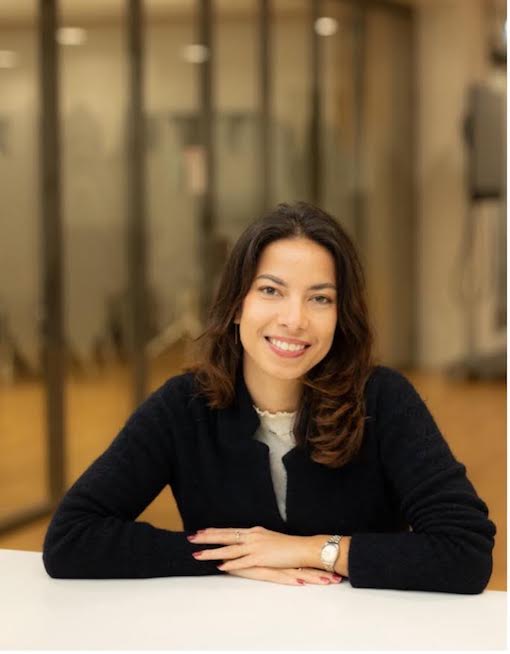
Dr. Dominique Mollet specialises in public health law, exploring how laws can set the terms for healthy behaviour and thereby prevent disease: as laws structure society and establish the conditions for both good and poor health, they are particularly effective tools to address the behavioural risk factors of disease. Her research focuses specifically on non- communicable diseases – chronic diseases that are the result of a combination of genetic, environmental and behavioural factors, such as diets.
In her PhD dissertation, she focused on the role of law in preventing dental caries (tooth decay), for which sugars consumption is the primary (behavioural) risk factor. She explore how law addresses sugars as a tradable and edible commodity from a public health perspective: if (excessive) sugars consumption is a major cause of disease, how, for example, does law regulate marketing of products high in sugars? Do laws regulating sugars as an edible commodity take public health into consideration? And do we have a (human) right to be protected of the aggressive marketing of foods high in sugars?
Dr. Mollet currently is a postdoctoral researcher and lecturer at the Groningen Centre for Health Law of the Law Faculty of the University of Groningen. Her continues to investigate how law impacts population health, and how public health protection and promotion can be better embedded in legislation.
Dr. Dominique Mollet is gespecialiseerd in gezondheidsrecht. Zij onderzoekt hoe wetgeving kaders kan scheppen voor gezond gedrag en daarmee ziekten kan voorkomen: omdat wetten de samenleving vormgeven en de voorwaarden bepalen voor zowel een goede als een slechte gezondheid, vormen zij een uiterst effectief instrument om gedragsgerelateerde risicofactoren voor ziekten aan te pakken. Haar onderzoek richt zich in het bijzonder op niet-overdraagbare aandoeningen – chronische ziekten die voortkomen uit een combinatie van genetische, omgevings- en gedragsfactoren, zoals voedingsgewoonten.
In haar proefschrift onderzocht zij de rol van het recht bij het voorkomen van tandcariës (gaatjes), waarbij de consumptie van suikers de voornaamste (gedragsgerelateerde) risicofactor is. Vanuit het perspectief van de volksgezondheid analyseerde zij hoe het recht omgaat met suikers als verhandelbaar en eetbaar product: als (overmatige) suikerconsumptie een belangrijke oorzaak is van ziekte, hoe reguleert het recht dan bijvoorbeeld de marketing van producten met een hoog suikergehalte? Houden wetten die suikers als consumptieproduct reguleren rekening met de volksgezondheid? En hebben wij een (mensen)recht om beschermd te worden tegen de agressieve marketing van voedingsmiddelen met veel suiker?
Dr. Mollet is momenteel als postdoctoraal onderzoeker en docent verbonden aan het Groningen Centre for Health Law van de Faculteit Rechtsgeleerdheid aan de Rijksuniversiteit Groningen. Zij zet haar onderzoek voort naar de invloed van wetgeving op de gezondheid van de bevolking en onderzoekt hoe de bescherming en bevordering van de volksgezondheid beter in wetgeving kunnen worden verankerd.
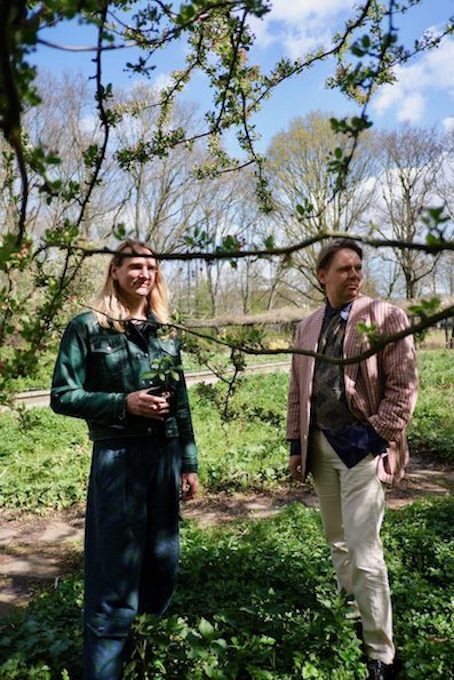
Collective de Onkruidenier investigates historical, cultural and potential transformations of nature and its possibilities to evolve humans. They do fieldwork – often in conjunction with audiences – collecting plants, the stories and histories associated with them. As ecosystem futurists, they speculate on the relationship between humans and (urban) nature, both above and below sea level. An important role is played here by questioning systems that are usually taken for granted. In the development of their work, interactions with the public and experts such as farmers, residents and scientists create new stories.
Collectief de Onkruidenier onderzoekt historische, culturele en potentiële transformaties van de natuur en haar mogelijkheden de mens te evolueren. Zij doen – vaak in gezamenlijkheid met publiek – veldwerk, verzamelen planten, de verhalen en geschiedenissen die daaraan verbonden zijn. Als ecosysteem futuristen speculeren ze over de relatie tussen mens en (stads)natuur, zowel boven als onder de zeespiegel. Een belangrijke rol hierbij speelt het bevragen van systemen die veelal als vanzelfsprekend beschouwd worden. In de ontwikkeling van hun werk zorgen interacties met publiek en experts zoals boeren, bewoners en wetenschappers voor nieuwe verhalen.
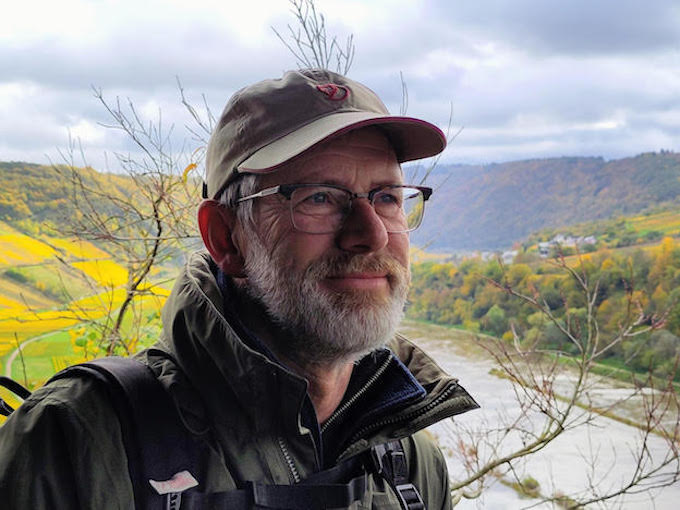
Benny Rijzebol is Lecturer in Education and Knowledge Management for the Green Sector (Horticulture, Arable Farming, and Precision Agriculture), more specific: ‘Green’ (agricultural/environmental) subjects and technology at a VMBO (pre-vocational secondary education) school, where he instructs students aged 12 to 15. He completed his teacher training for the ‘Green’ sector at Aeres Wageningen. His expertise lies in precision agriculture—specifically, working with sensors and processing data into maps—which enables sophisticated machinery to operate with high precision during tasks such as spraying, sowing, and fertilizing. This process also allows for the mapping of harvest yields.
His students fall within the BB (basic vocational) to GL (theoretical/vocational) academic levels. His curriculum covers material relevant to the four ‘Green’ VMBO profiles: Green Production; Production and Sales; Greening the Urban Environment; and Green Design and Sales. Additionally, he teaches an elective course on ‘Green Machinery,’ where students learn about engine technology, equipment used in the agricultural and landscaping sectors, various types of transmission systems, and lighting on agricultural vehicles. He frequently takes his students to visit businesses in the fields of arable farming, livestock farming, and landscaping.
Benny Rijzebol has a background in agriculture; he grew up on an arable farm in the northern part of the province of Groningen.
Benny Rijzebol is docent Educatie en Kennismanagement Groene sector, Tuin- Akkerbouw en Precisielandbouw, meer specifiek: docent Groen en techniek op een vmbo en geeft hij les aan leerlingen tussen de 12 en 15 jaar. Bij Aeres Wageningen heeft hij de opleiding tot docent Groen gevolgd. Met als specialisatie precisielandbouw, het werken met sensoren en het verwerken van data naar taakkaarten. Zodat machines nauwkeurig kunnen werken, spuiten, zaaien en bemesten. Waarna ook de oogst-opbrengsten in beeld worden gebracht.
Zijn leerlingen hebben het niveau tussen BB en Gl. En zijn vak bestaat uit het verzorgen van lessen voor de vier profielen aan het groene vmbo (Groene productie, Tussen productie en verkoop, vergroening stedelijke omgeving en Groene vormgeving en verkoop). Daarnaast geeft hij nog het keuzevak Groene machinepark. Waar leerlingen leren over motortechniek, machines in de groene sector, verschillende typen overbrengingen en verlichting op landbouwvoertuigen. Met regelmaat is hij met leerlingen te vinden op bedrijven die te maken hebben met de akkerbouw, veehouderij en hoveniers.
Hij heeft een achtergrond in de landbouw, zo is hijzelf ook opgegroeid op een akkerbouwbedrijf in het noorden van Groningen.
Diego Virgen (MX) works at the intersection of food studies, sociology, cooking, and everyday life. His research focuses on collective human encounters and the journey food takes—from production, sourcing, and consumption to the imaginaries and speculations that arise around it. In his recent work, he explores sweets and the ways people relate to sugar from both sociological and artistic perspectives.
Diego Virgen (MX) werkt op het snijvlak van voedselstudies, sociologie, koken en het dagelijks leven. Zijn onderzoek richt zich op collectieve menselijke ontmoetingen en de reis die voedsel aflegt – van productie, inkoop en consumptie tot de voorstellingen en speculaties die daaromheen ontstaan. In zijn recente werk onderzoekt hij zoetwaren en de wijze waarop mensen zich verhouden tot suiker, vanuit zowel sociologisch als artistiek perspectief.
MIST is a ongoing collaborative project by Rebekka Bank (DK) and Tomás Ornaghi (IT) combining contemporary art, functional design and social practice. It revolves around interaction and exchange. Through material storytelling, audience activation and experimental dinners they explore familiar social environments such as living rooms, kitchens, gardens and restaurants. By re-contextualising domestic objects, MIST investigates the historical, social and material infrastructures surrounding gatherings.
The pantry, in this sense, becomes a space that stores what refinement makes invisible. By bringing fragments of industrial production into the domestic space, it reconnects the everyday ingredient to the land, labour and resources surrounding its production. It becomes a place where these distant scales can meet: where the smallness of a spoonful of sugar is confronted with the scale of what is required to produce it.
MIST is een doorlopend samenwerkingsproject van Rebekka Bank (DK) en Tomás Ornaghi (IT) dat hedendaagse kunst, functioneel design en sociale praktijk met elkaar verbindt. Het draait om interactie en uitwisseling. Via het vertellen van verhalen aan de hand van materialen, het activeren van het publiek en experimentele diners verkennen zij vertrouwde sociale omgevingen, zoals woonkamers, keukens, tuinen en restaurants. Door alledaagse huiselijke voorwerpen in een nieuwe context te plaatsen, onderzoekt MIST de historische, sociale en materiële infrastructuren die samenkomen rondom sociale ontmoetingen.
De voorraadkast wordt in deze context een ruimte die datgene bewaart wat door verfijning en bewerking onzichtbaar is geworden. Door fragmenten van industriële productie naar de huiselijke sfeer te brengen, wordt een verbinding hersteld tussen alledaagse ingrediënten en het land, de arbeid en de hulpbronnen die bij de productie ervan betrokken zijn. Het wordt een plek waar uiteenlopende schaalniveaus elkaar kunnen ontmoeten: waar de kleinschaligheid van een lepel suiker wordt geconfronteerd met de enorme schaal van wat nodig is om die suiker te produceren.
VELD Collectief: Lotte d’Ailly (NL), Rina Hellinga (NL), Liz de Vries (NL), and Inès Buter (NL)
What does a lost sugar beet leave behind? Every autumn, the sugar beet campaign takes over Groningen. For four months, day and night, trucks carry mountains of soil-covered beets to Cosun Beet Company, where they are transformed into pure white sugar. Yet despite the trucks, smells, and mountains of beets, what happens along the way remains largely hidden. For this exhibition, VELD Collectief have set up the BEET-hotline, through which locals can share the location of the lost sugar beets. During the four week exhibition, the collective will continuously retrieve the lost beets from roads and roundabouts, only to add them afterwards to their art installation, where they can be processed into sugar.
VELD Collectief invites the audiences into their small-scale Sugar Beet lab to uncover what a lost beet can become—and what it leaves behind.
VELD Collectief – Lotte d’Ailly (NL), Rina Hellinga (NL), Liz de Vries (NL) en Inès Buter (NL)
Wat laat een verloren suikerbiet achter? Elke herfst staat Groningen in het teken van de bietencampagne. Vier maanden lang rijden dag en nacht vrachtwagens vol met aarde bedekte suikerbieten naar de Cosun Beet Company, waar ze worden verwerkt tot spierwitte suiker. Maar ondanks de vrachtwagens, de geuren en de bergen bieten, blijft het proces onderweg grotendeels verborgen. Voor deze tentoonstelling heeft VELD Collectief de ‘BIETEN-hotline’ in het leven geroepen, waar omwonenden de locaties van verloren suikerbieten kunnen doorgeven. Gedurende de vier weken durende tentoonstelling verzamelt het collectief de verloren bieten van wegen en rotondes, om ze vervolgens toe te voegen aan hun kunstinstallatie, waar ze alsnog tot suiker kunnen worden verwerkt.
VELD Collectief nodigt het publiek uit in hun kleinschalige ‘suikerbietenlab’ om te ontdekken wat een verloren biet kan worden – en wat deze achterlaat.